TMJ / TMD Disorders
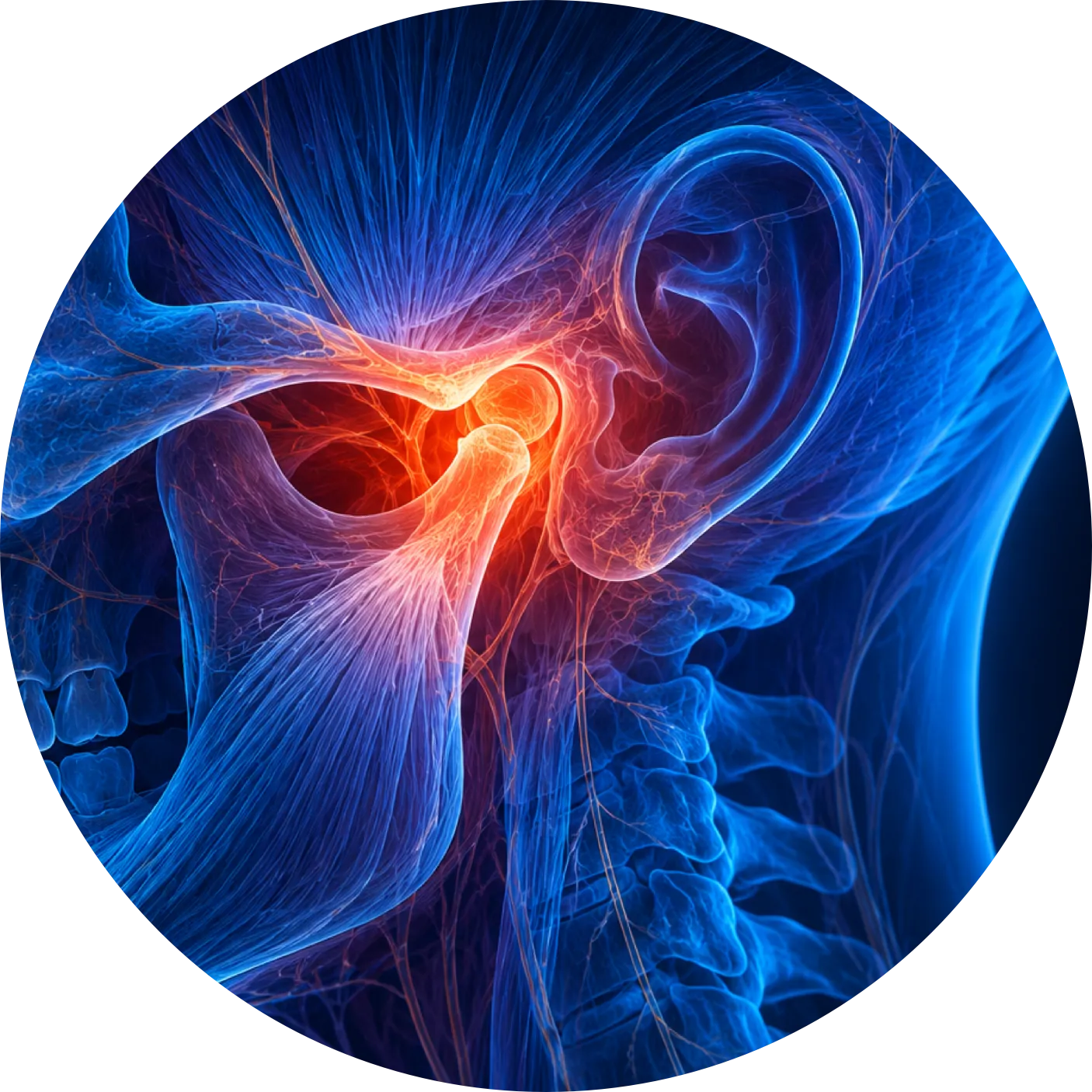
Dysfunction of the temporomandibular joint, including disc displacement, inflammation and joint degeneration.
Neuromuscular dentistry in Mumbai focuses on the harmony between your teeth, jaw joints, muscles and airway. TMJ treatment that restores comfort, function and long-term stability.
Tap the ones that feel familiar. If even two or three apply, a neuromuscular evaluation is worth a conversation.
Selected Symptoms: 0
Most jaw pain isn't random. It follows a pattern, and once you can see it, the path to relief becomes obvious.
Misaligned teeth or jaw positions create uneven loading across the jaw and muscular system.
Surrounding muscles work harder to compensate, creating chronic tension, fatigue and dysfunction.
Sustained strain leads to joint inflammation, nerve sensitivity and symptoms that can radiate into the neck, head and shoulders.
Dysfunction of the temporomandibular joint, including disc displacement, inflammation and joint degeneration.
Chronic teeth grinding and clenching that causes tooth wear, jaw fatigue and muscle overload.
Myofascial pain affecting the face, temples and jaw muscles.
Malocclusion patterns where teeth do not function together harmoniously.
Persistent muscle tightness and guarding in the masseter, temporalis and pterygoid muscles.
Uneven dental forces that affect chewing efficiency, tooth wear and long-term structural health.
Jaw positions that influence breathing patterns and contribute to airway narrowing or sleep-related breathing concerns.
Neuromuscular conditions linked to airway compromise and disrupted sleep architecture.
Scroll for more
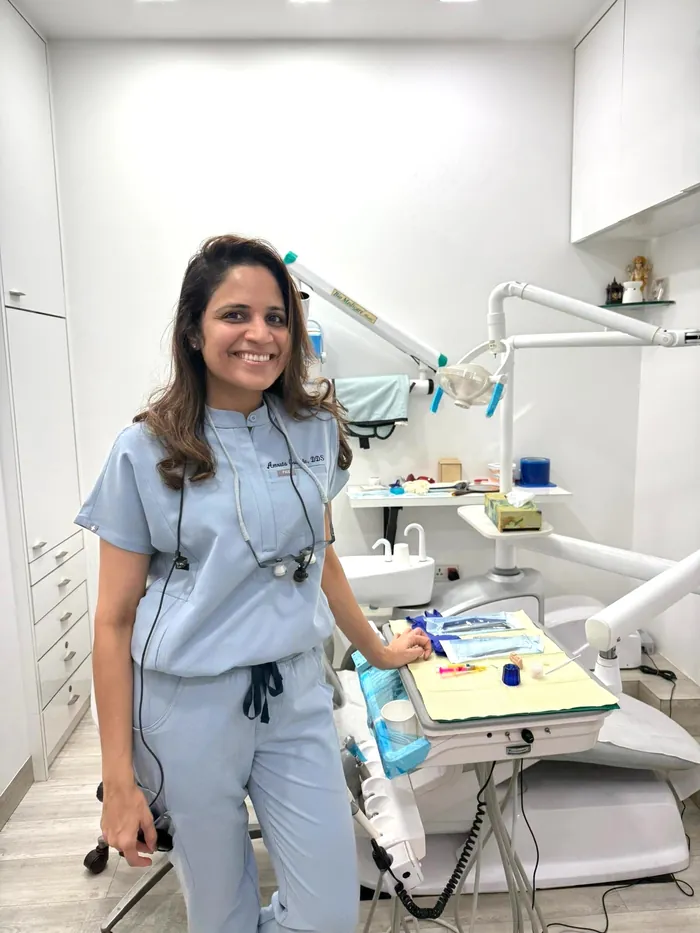
Dr. Amruta Godbole's training in neuromuscular dentistry in Mumbai sits at the intersection of restoration, occlusion and airway. Her approach to TMJ treatment is diagnostic before it is corrective, the bite, the joints, the muscles and the way you breathe at night are all part of the same picture.
Patients walk into our Khar West clinic with headaches, ear pressure, clicking jaws, bruxism or sleep-apnea concerns, and walk out with a clear explanation of what is causing them and a layered TMJ and neuromuscular plan to fix it, starting with the least invasive option that actually works.
We sequence treatments from the least invasive upward. Most patients find relief long before they reach the bottom of the list.
Scroll for more
If something in your jaw, sleep or daily tension feels persistent, an evaluation is the fastest way to a clear answer.
Clinic Hours
Mon – Sat · 10:00 AM – 7:00 PM
Phone
+91 97690 05504
dramrutagodbole@gmail.com
Address
B-204, Ganga Jamuna Building, 14th Rd, above Mizu Restaurant, Khar West, Pali, Mumbai 400052